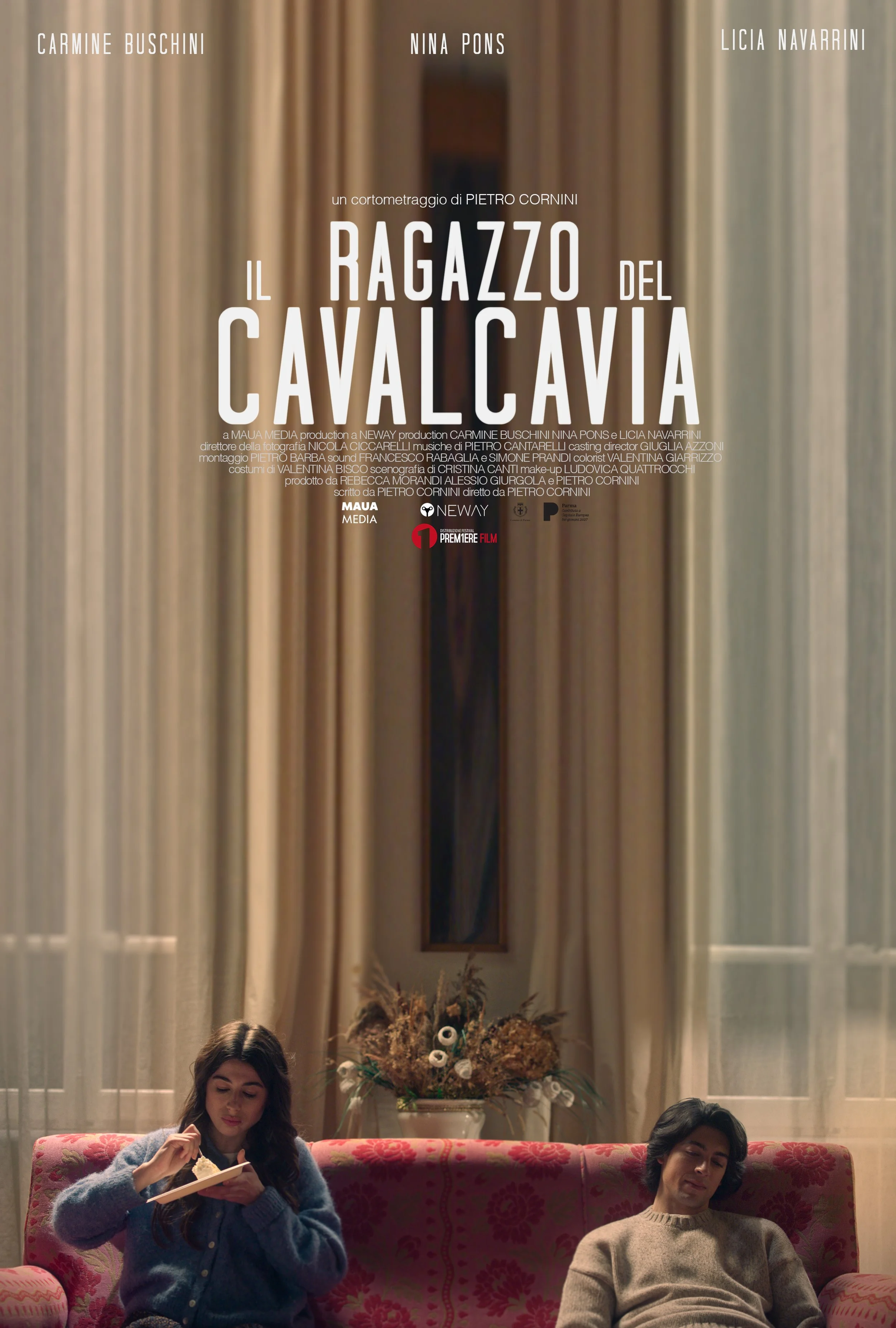
IL RAGAZZO DEL CAVALCAVIA
A short film written and directed by Pietro Cornini.
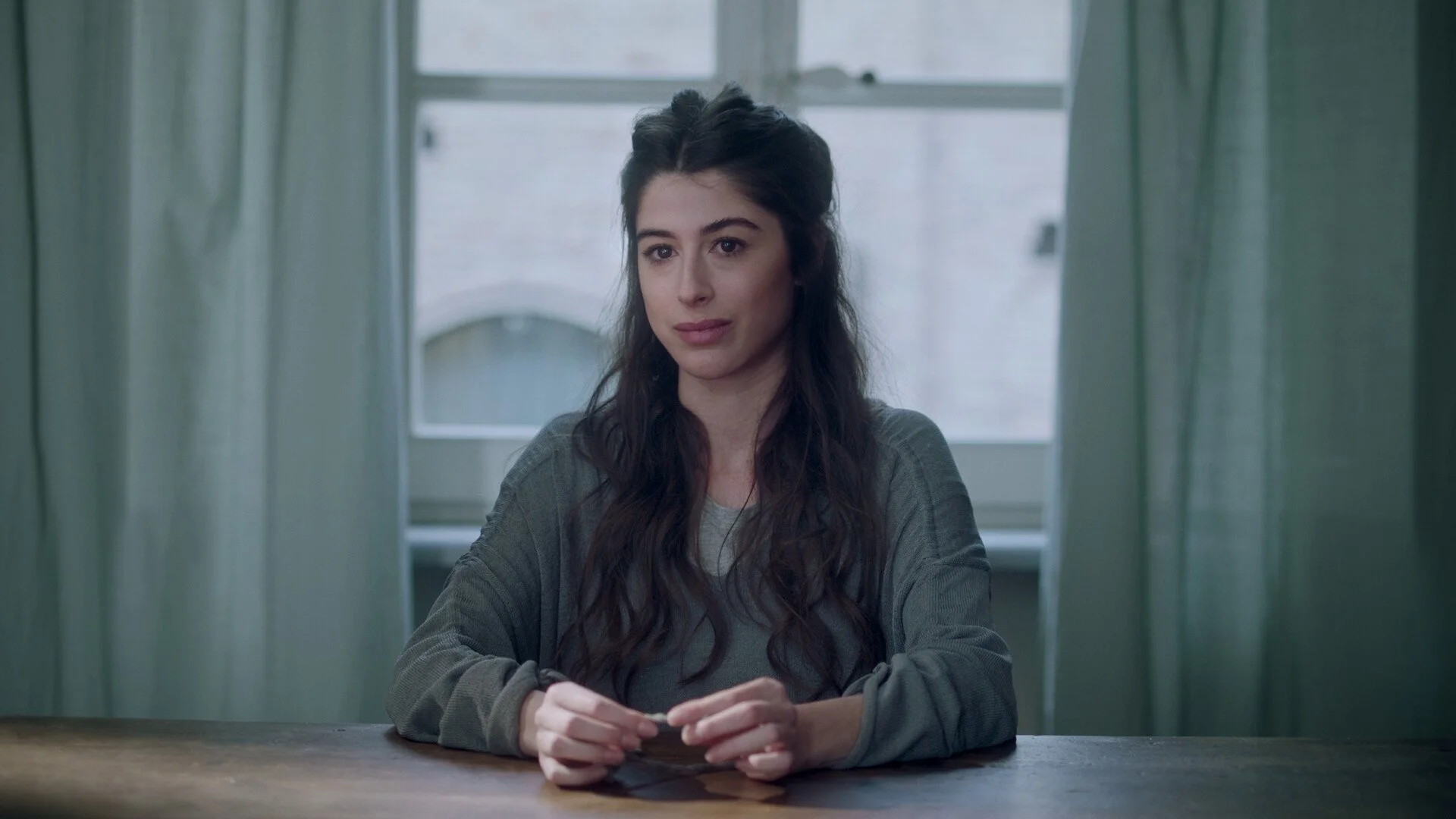
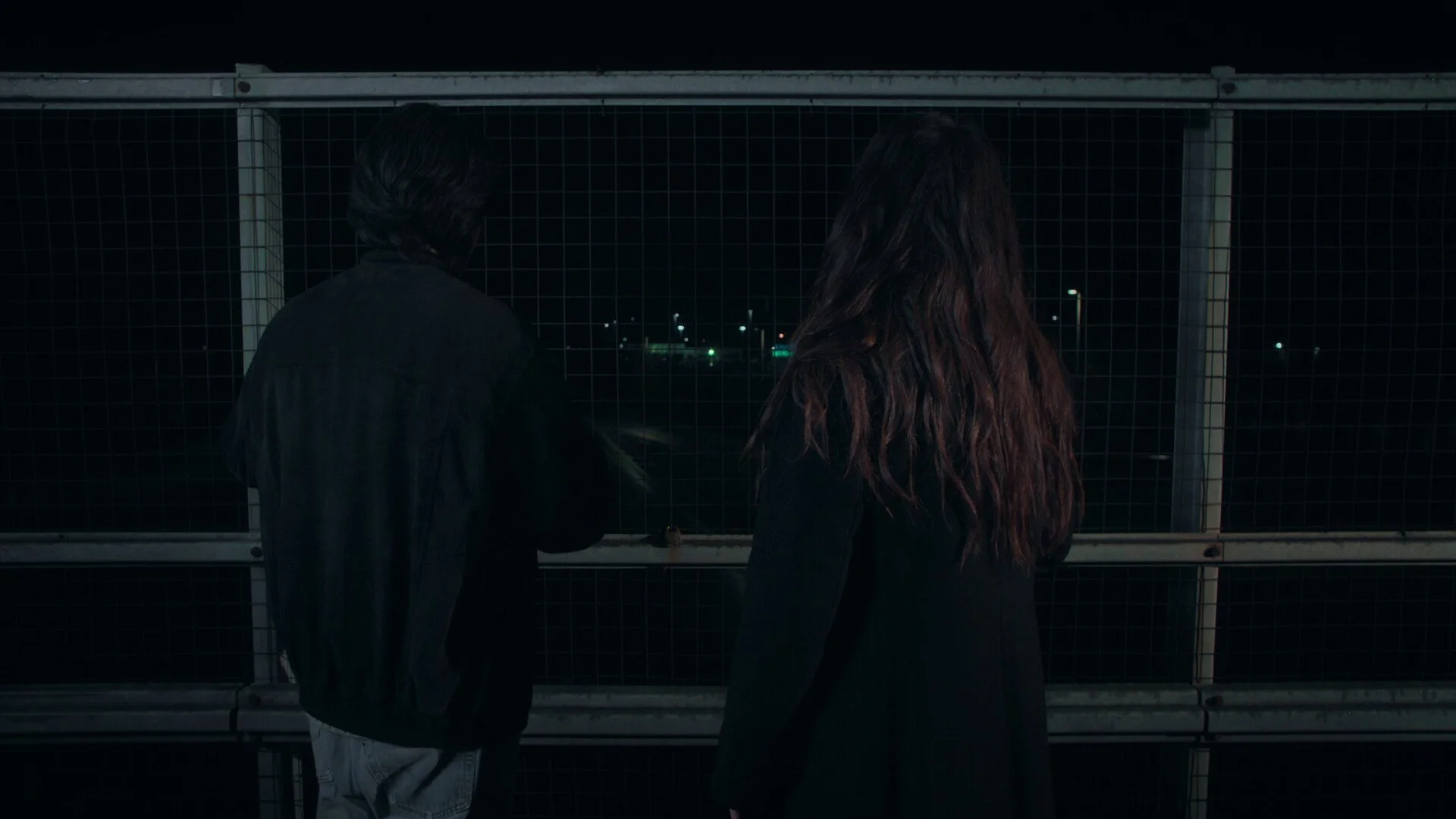
Through an interview with Giada, we get to know Giacomo, a young man who appears to be close to graduating, but who has actually stopped attending university without telling anyone. During an important evening for his brother Carlo, his inner conflict grows, eventually culminating in a decisive moment on an overpass that changes his life forever.
An Italian-American co-production with the Los Angeles–based production company Maua Media LTD and Neway SRL of Reggio nell’Emilia, the short film was shot entirely in Pietro Cornini’s hometown, among the streets and houses of the city where he spent his entire childhood.
Created with the participation of the Youth Department of the Municipality of Parma, which supported the project, and in association with Fidenza@Cultura.
Distributed by Film Premiere, the short film took part in nine Italian and international festivals, including Ennesimo Film Festival, Amarcort Film Festival, Social World Film Festival, and the Basilicata International Film Festival.
An ambitious, high-budget project that director Pietro Cornini chose to approach from a production standpoint with the same high standards and quality as a feature film, as a way to challenge himself.
(2025)
ARTICLES

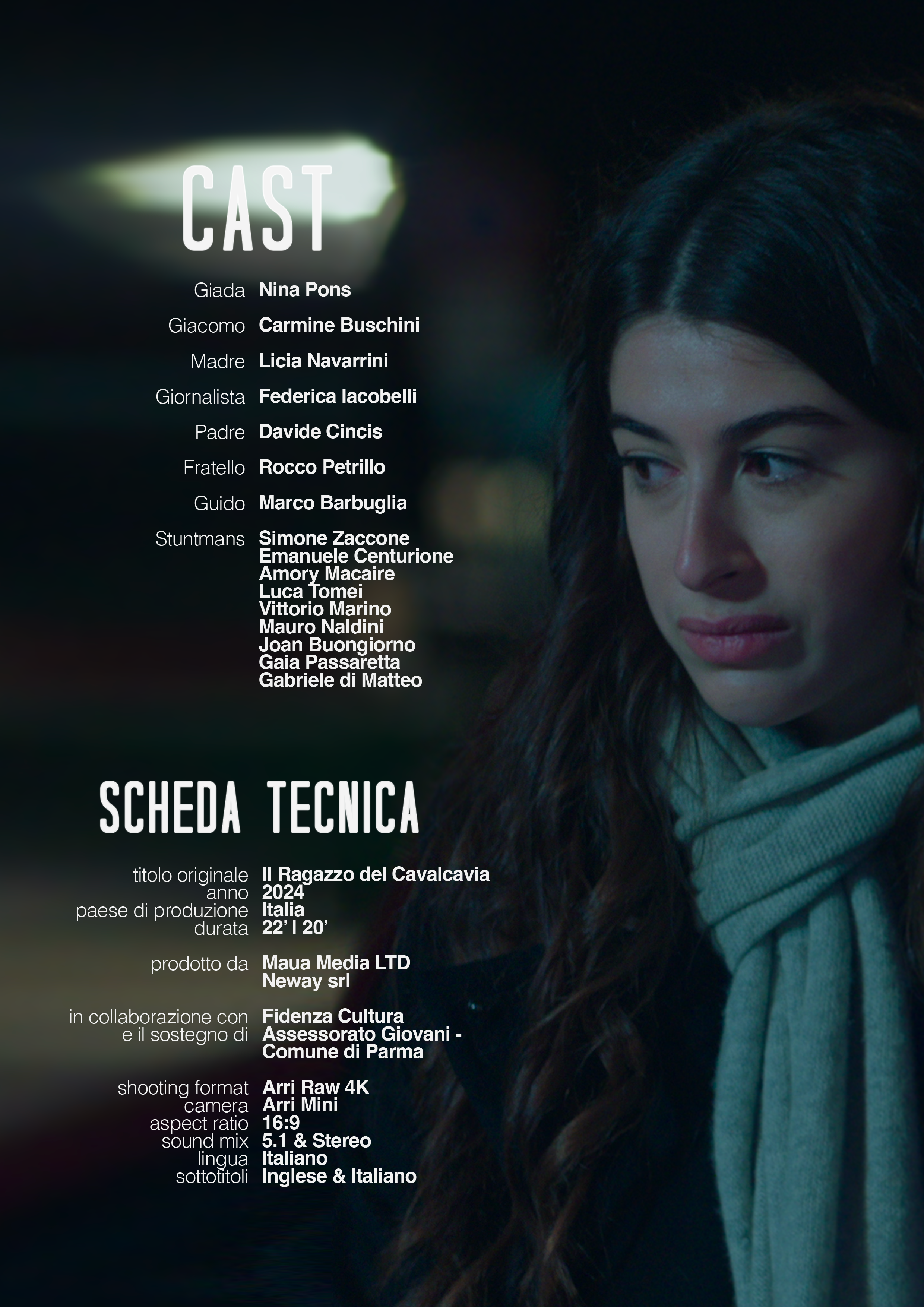
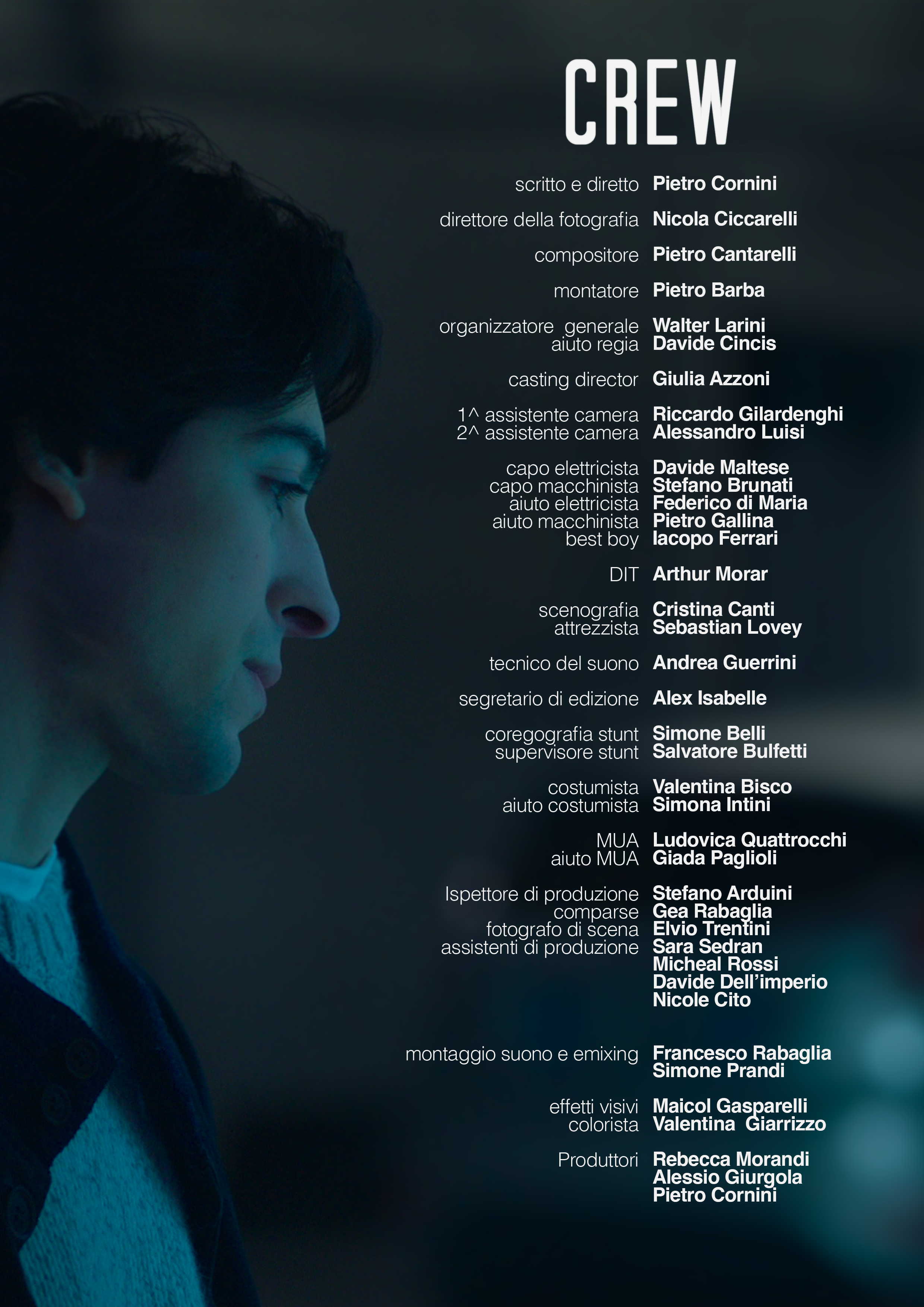
ALL THE SHORT FILM INFO CAN BE FOUND IN THE PRESS BOOK

The short film is a cinematic project born from a deeply personal desire to explore the profound emotional complexities faced by young adults in contemporary society, caught between emotional disconnection and the search for identity. I have closely observed how many of us, unable to stand up to the “perfect” artificial reality we are expected to live in, end up retreating inward or numbing their lives, causing a genuine internal emotional fracture that leads to an inability to fully experience and understand one’s own feelings.
I wanted to give a voice to this reality, drawing inspiration from the act at the center of an episode from Italy’s past that became one of the starting points for public discussion on this subject, with the aim of encouraging dialogue and opening up opportunities for reflection and exchange between different generations.